

Looking, and Looking Again
On the influence of Robin Boyd

I recently gave an online lecture at ETH Zurich, which asked us to explore a key architectural influence. It became a catalyst for this piece, our first Seasonal Essay, which reflects on the Australian architect Robin Boyd. This will (probably) be our last note for 2025, so we look forward to sharing plenty more in 2026. Have a wonderful break, everyone.
The word “influence” comes from the Latin influere and means to flow. This hints at the idea that our influences are not static, rather, they’re experienced in an ongoing dialogue, or process of exchange.
For us, the architect Robin Boyd has been one of those influences – a figure we have returned to, time and time again, throughout the process of forming our practice.
For those who don’t know him, Robin Boyd was a prolific public figure in Australia, and a man of many talents.
First and foremost, he was an architect, who chiefly worked on housing. He also published many influential books, wrote magazine and newspaper articles, appeared on television, gave public lectures, and taught at two Melbourne universities.
And he did all of this within a relatively short lifespan, given he was born in 1919 and died aged 52.
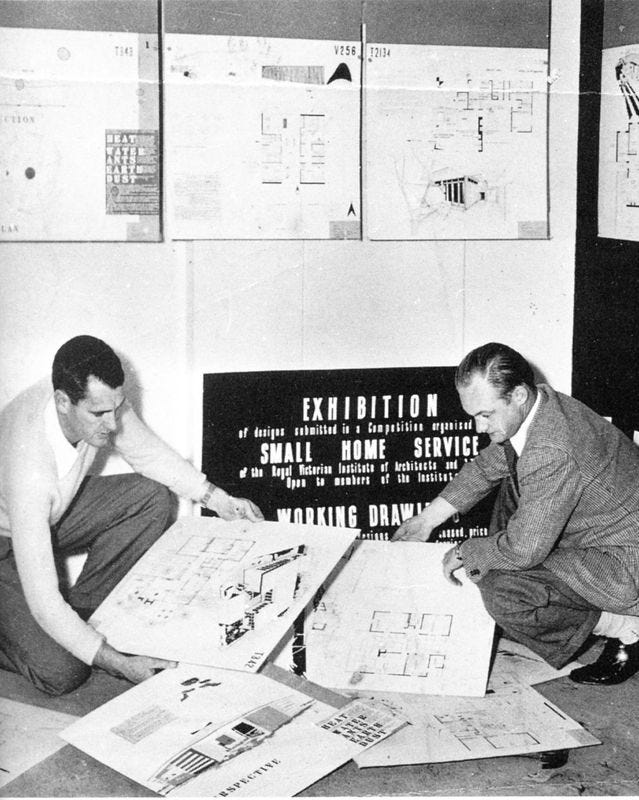
Outside of this extensive list, Boyd was also instrumental in an organisation called the Small Homes Service. Running from 1947 to 1971, this initiative published high quality yet affordable home designs in Melbourne’s main newspaper. This gave Boyd a chance to publicly endorse good design, and it was in this role that he became a household name.
(Interestingly, there was an equivalent service here in Sydney - seen in the homes of Pettit+Sevitt - which in part inspired the recent NSW Pattern Book.)
In short, Boyd was a force. He was a tireless advocate for architecture in a country that often treats good buildings as a luxury. Using multiple means, he prompted significant discussions around how to build for our culture, context and climate.
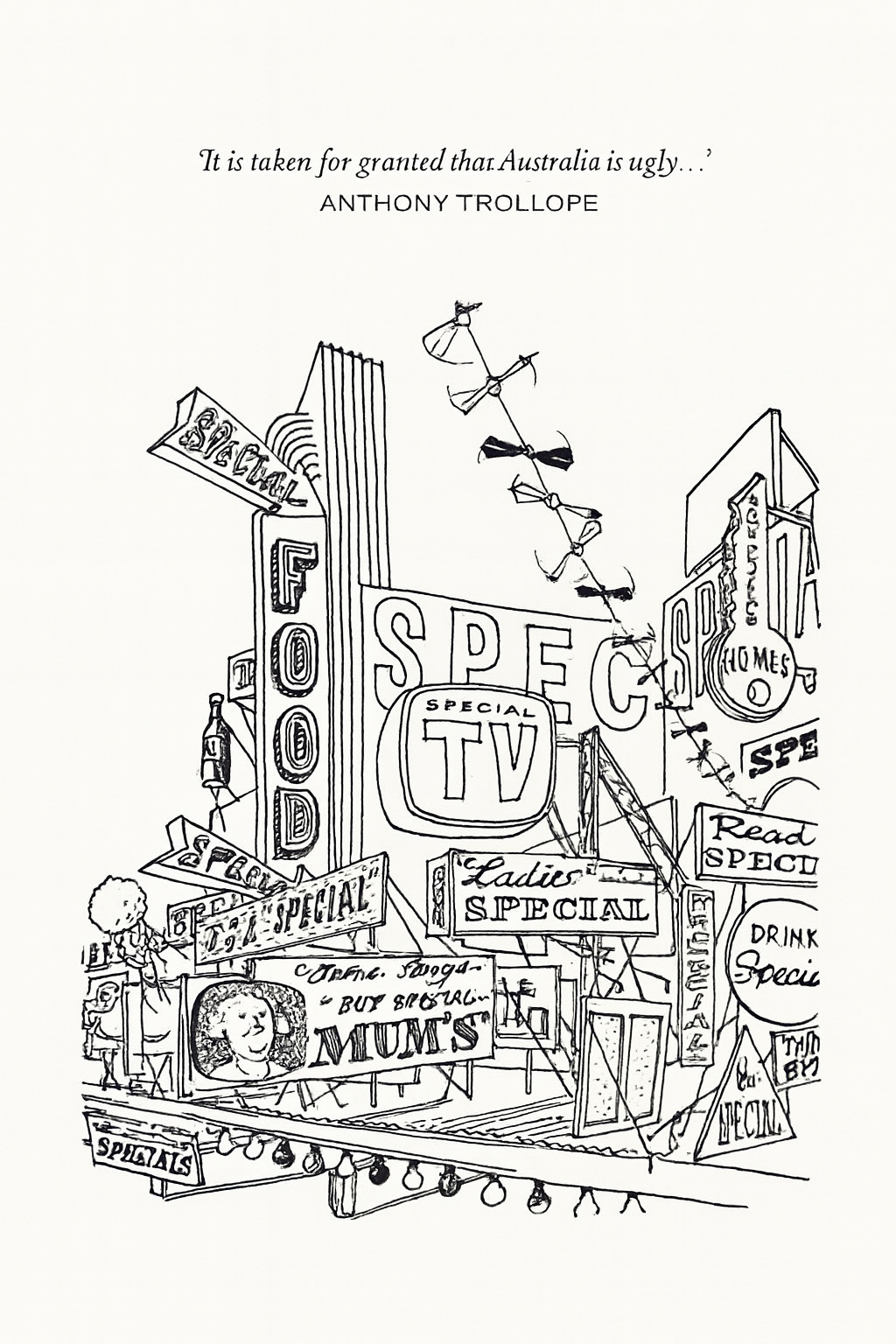
He also held a mirror up to our housing, prompting questions about who we are, as a culture, and how we should live. On the very first page of his most well-known text, The Australian Ugliness – written sixty-four years ago - he comes out swinging: “This is a country of many colourful, patterned, plastic veneers, of brick-veneer villas, and the White Australia policy.” His rhetoric, while often damning, was also fundamentally underscored by a love of Australia and a belief we could, and should, do better.
Thinking back, I can’t pinpoint when I first encountered Robin Boyd, but it would have been early in my tertiary education. I had started an architecture degree with journalism as a second choice; I figured writing was a good fallback if I didn’t like design.
This meant that, at first, Boyd’s influence was largely symbolic, because he worked and he wrote. He represented an ideal, namely, the possibility for a life - and practice model - that balanced architectural work with broader influence. He also demonstrated how time spent designing one-off, ambitious architectural homes could be countered with more democratic outreach. For a young student, this biography was irresistible.
So it was through myth, as much as reality, that Robin Boyd claimed his place in my personal canon. From there, and as we discovered the Small Homes Service, his influence extended.
Like Boyd, Jonnie, Casey and I wanted to ground our careers in housing. We also admired Boyd’s larger ambition: to rethink suburban housing in Australia.
Our university projects formed early experiments. Then, beyond our studies, and in the margins of early graduate jobs, we started doing housing competitions, both as a means of reimagining suburbia and of testing our instincts.
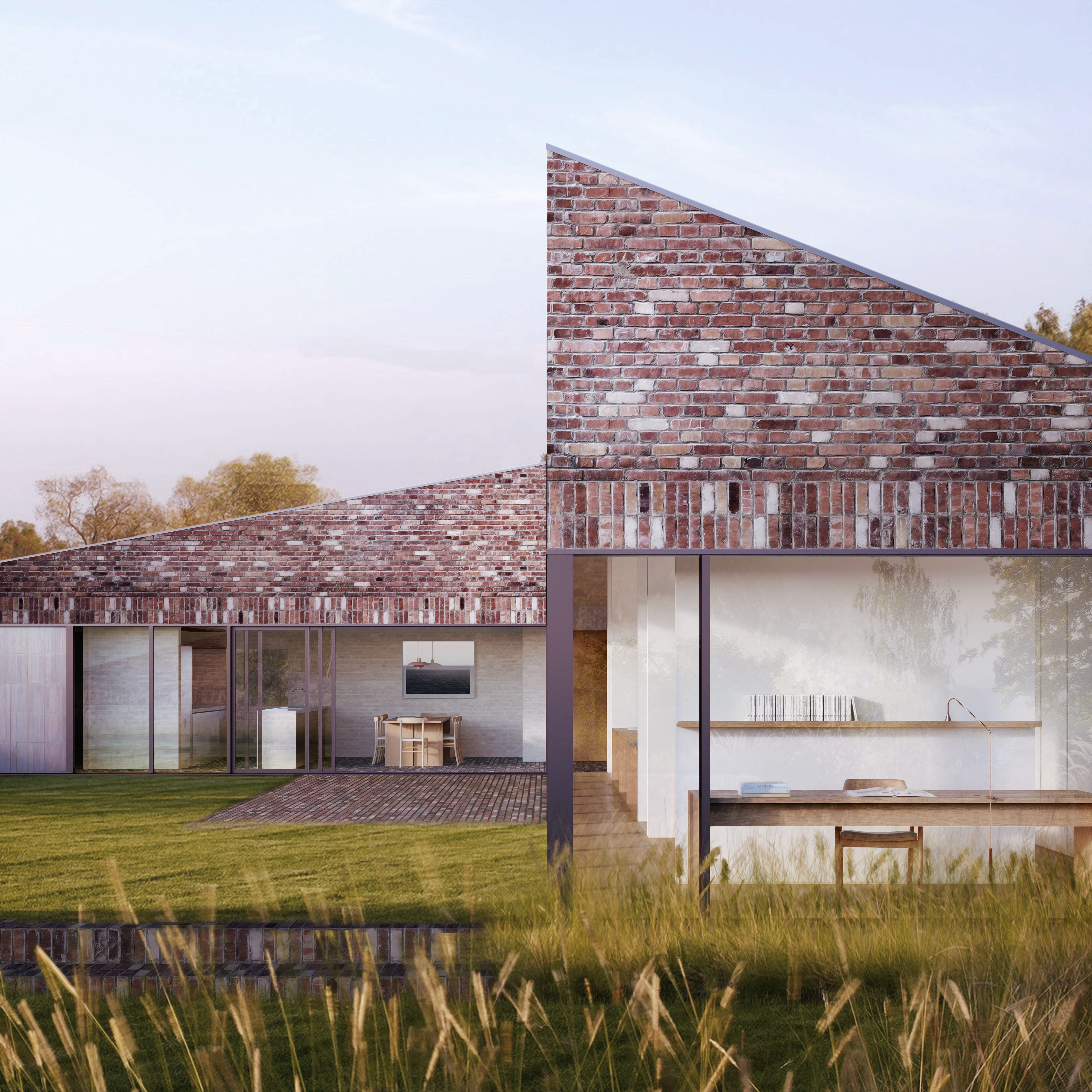
We didn’t know it at the time, but these early competitions laid the groundwork for our practice.
Between 2015 and 2017, we won, or placed, in four significant national housing competitions. One of these competitions directly resulted in our first built commission, Three Piece House, after two future clients, Leisha and Helge, saw our winning student entry and bravely asked us to design them a home.
All the competitions were inspired, at least in part, by the Small Homes Service, and the legacy of Robin Boyd. Our values ran in parallel: modesty, a response to place and context, a wish to quietly provoke change in our cities and suburbs.
In 2017, we formalised Trias as a company. That same year, we began Minima, a partnership with Fab Pre Fab. This ongoing project explores modular, prefabricated housing, with a catalogue of designs that balance affordability with quality. We have now built fourteen Minimas around Australia and have countless more in the works. It was, and remains, our attempt to extend architecture’s reach.
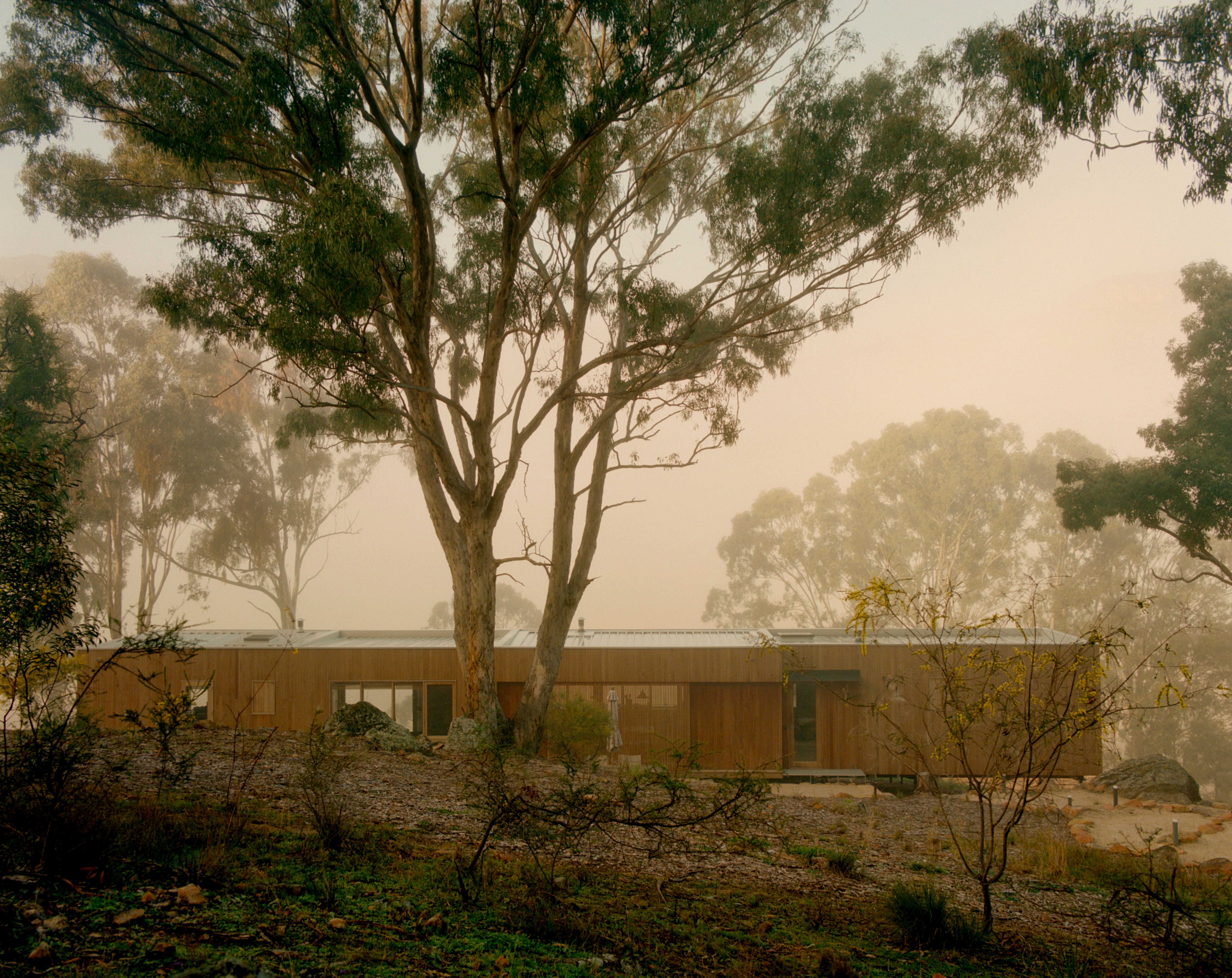
In these ways, Boyd was foundational in how we established ourselves. I can still see his imprint in our practice model; in what we say yes to, in the housing work that I teach, and even here, in our commitment to writing and words.
And yet those early days of Trias, spent working around the kitchen table, now feel like a lifetime ago. While we are still considered young – emerging, in architectural circles – we now have a website full of built projects and a healthy pipeline.
This means that, over time, we have looked less to Boyd as a symbol of how we might practice, and more to his portfolio of architectural work. This has aligned with our own shift towards building more buildings and exploring more ambitious ideas.
I recently pulled out copy of a well-thumbed book, Robin Boyd: Spatial Continuity, which sits on our studio’s shelves. It was written by two outstanding architects, Mauro Baracco and Louise Wright, of Melbourne-based practice, Baracco + Wright.
In their book, they describe their own practice’s work as “inching forward in this (Boyd’s) lineage.” When I read this, I thought, yes. We, too, sit in a continuum of Australian practitioners, who, in our own ways, all look to, and flow on, from Robin Boyd.
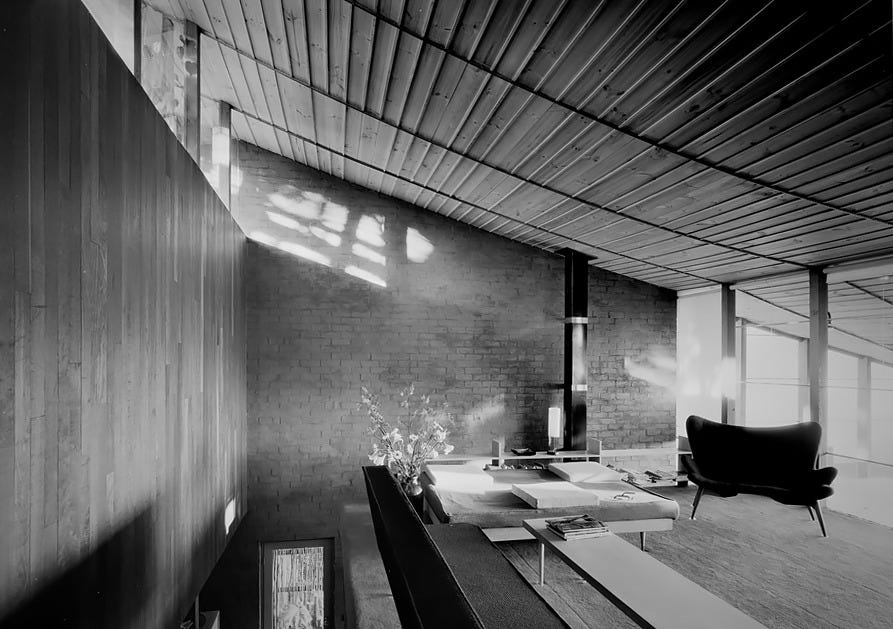
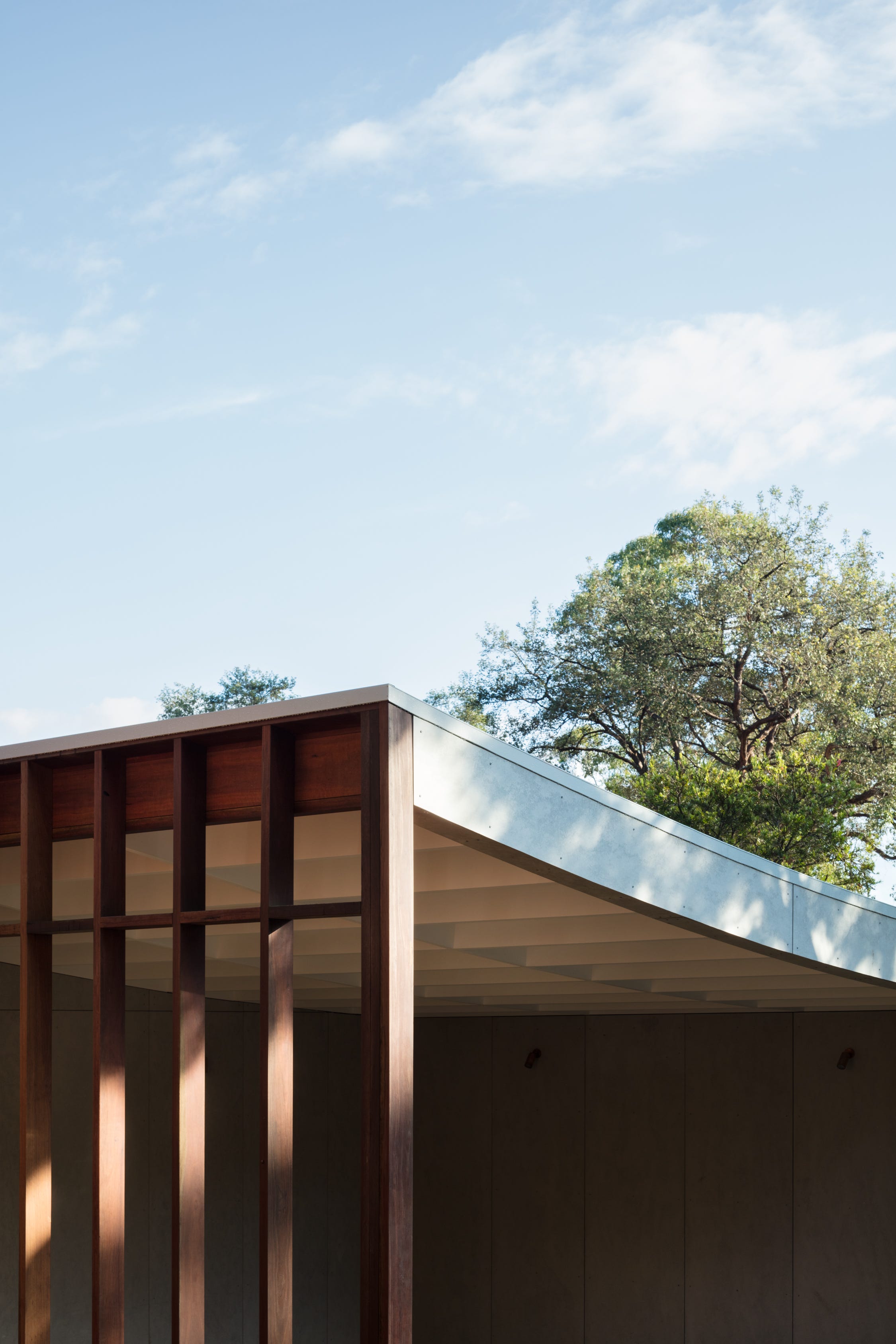
Boyd’s buildings have a diagrammatic simplicity that seems almost effortless. I think here of the Holford House, a home held by a singular roof plane, which sweeps down over internal rooms and a courtyard, as land steps and slips beneath. In a similar way, we seek diagrammatic simplicity: that magical unification of plan and section, material and form.
Boyd’s work is experimental, in ways both subtle and spectacular. At one end of the spectrum, there is a looseness in the way doors and circulation routes are formed – centripetal in some spaces, axial in others. At the other end, Boyd abandons domestic conventions. Platforms replace rooms, rooms become courtyards, courtyards define occupation – they are all, as Boyd denotes, capable of “something more.” When I look at his work, it stretches our sense of what a home might be.
Then there is the way that Boyd’s designs are deeply responsive to our cultural habits and climate. He instinctively understood the patterns of Australian life, especially the way that we live on the edge of the outdoors, with some form of screening or shelter from the elements.
Boyd’s buildings honour these experiences, but rethinks them, so they become unexpected. I think here of Arnold House, with a balcony that projects outwards, but remains protected beneath a broad roof. The roof then extends sideways, shielding the building and holding a distant view.
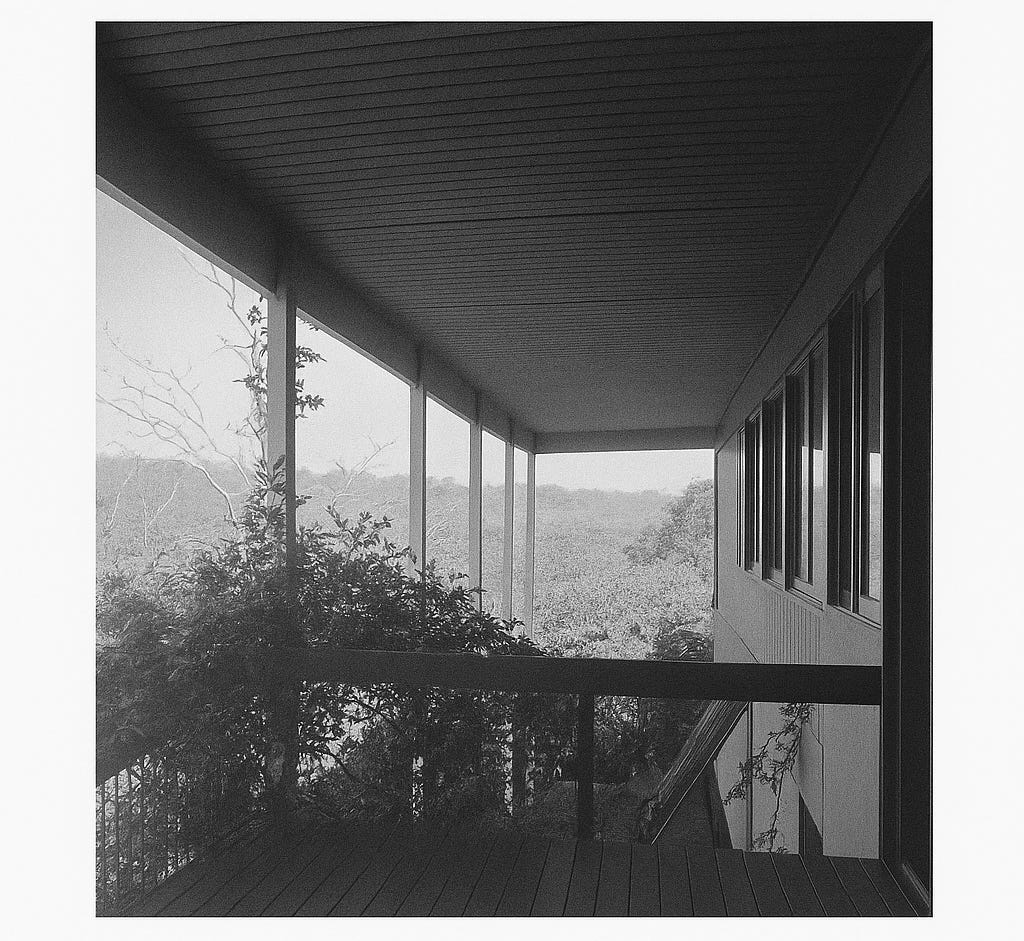
Every time I flick through one of Boyd’s book, I see something new. This, too, speaks of an influence; of returning in orbit; reassessing and reforming anew.
More recently, there have been two further ideas that we’ve been discussing in the practice, courtesy of Robin Boyd.
One is that of “spatial continuity,” a term taken from Baracco + Wright’s book of the same name. This idea has overlapped with conversations we’ve been having about another, seemingly unrelated book, called Five Good Swiss Plans, written by our friends and colleagues, Kate Finning and Guillermo Fernández-Abascal.
In their introduction, they write:
“But what of the art of the domestic floor plan? The narrowing of floor plan design to quantifiable criteria is a reduction of its material potential. Spaces rarely exist in binaries and yet we are taught to design through oppositional concepts such as served vs servant, open vs closed, public vs private and indoor vs outdoor spaces. In reality, architectural elements and formal motifs define the character of spaces through degrees. We might imagine that the rooms of a plan exist on a qualitative spectrum, from open to closed, dark to light, or wet to dry…. It might be difficult to describe, but this qualitative approach is no less precise.”
To draw parallels, “spatial continuity” alludes to an architecture defined less by binaries and more by the spaces between.
It is easy to imagine space in a manner that is exclusionary, that separates inside and out, house and garden, and so on. Instead, Boyd’s work explores a spectrum, “virtually conjugated by the term ‘or’ rather than ‘and.’” In this way, his work speaks of the possibilities and ambiguities that arise when let things become blurry.
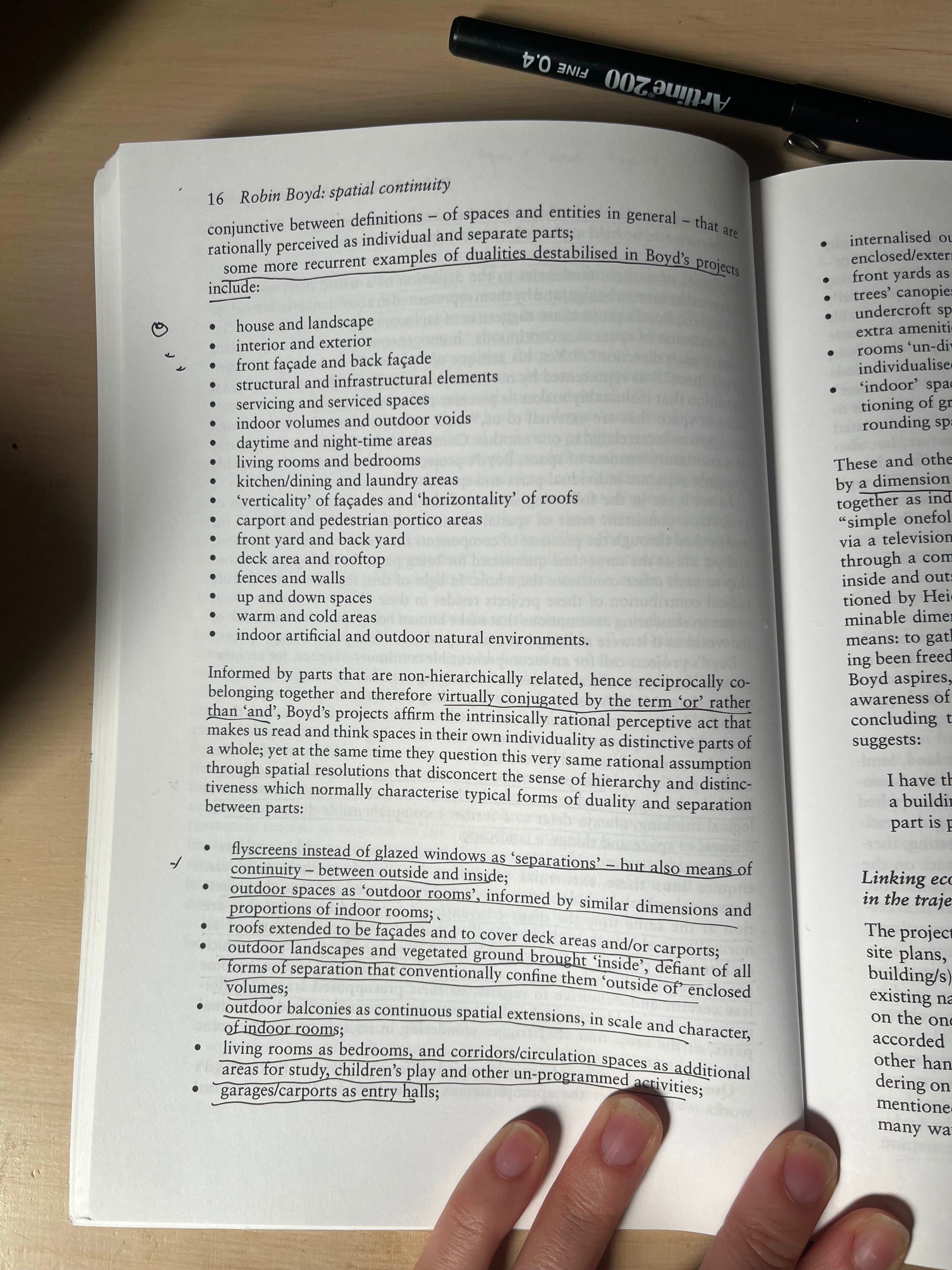
Beyond the spectra implied by this list, the other lesson we continue to learn from Boyd relates to landscape.
Landscape, in Australian discourse, is a highly contested term - mainly because our very country is Country, or unceded indigenous land. In his novel, Cloudstreet, the Australian author Tim Winton wrote that “architecture is what we console ourselves with once we’ve obliterated our natural landscapes,” and Australia is a nation forever obliterating, with mines that depress deep into the ground as our cities climb upwards and spiral outwards.
Boyd speaks of this same process in The Australian Ugliness with considerable contempt; he is scathing of the way our landscape is treated in the face of suburban sprawl. He writes:
“Each newcomer builds an attractive house, an original house, a nice feature on the landscape. After several of these have been built, each tugging at nature in different direction, the earlier settlers look about in dismay and pronounce the area spoiled. About this time the subdividers arrive, and behind them the main wave of suburbia. Then all the remaining native trees come crashing down before the bulldozers and soon rows of cottages and raw paling fences create a new landscape….They condemn one another for spoiling the landscape, but in fact none is to blame individually while all are to blame collectively.”
In his writing, Boyd was fierce to the point of becoming acerbic. I can’t help but wonder, were he writing today, if he would add further ammunition to his artillery, shining a spotlight on the gluttinous size of Australia’ homes, or on ongoing land-clearing practices. I am sure he wouldn’t have stayed silent, for he was certainly unafraid.
Yet, even today, what makes Boyd so influential is that he didn’t just provoke with his words; he did it with his work, too.
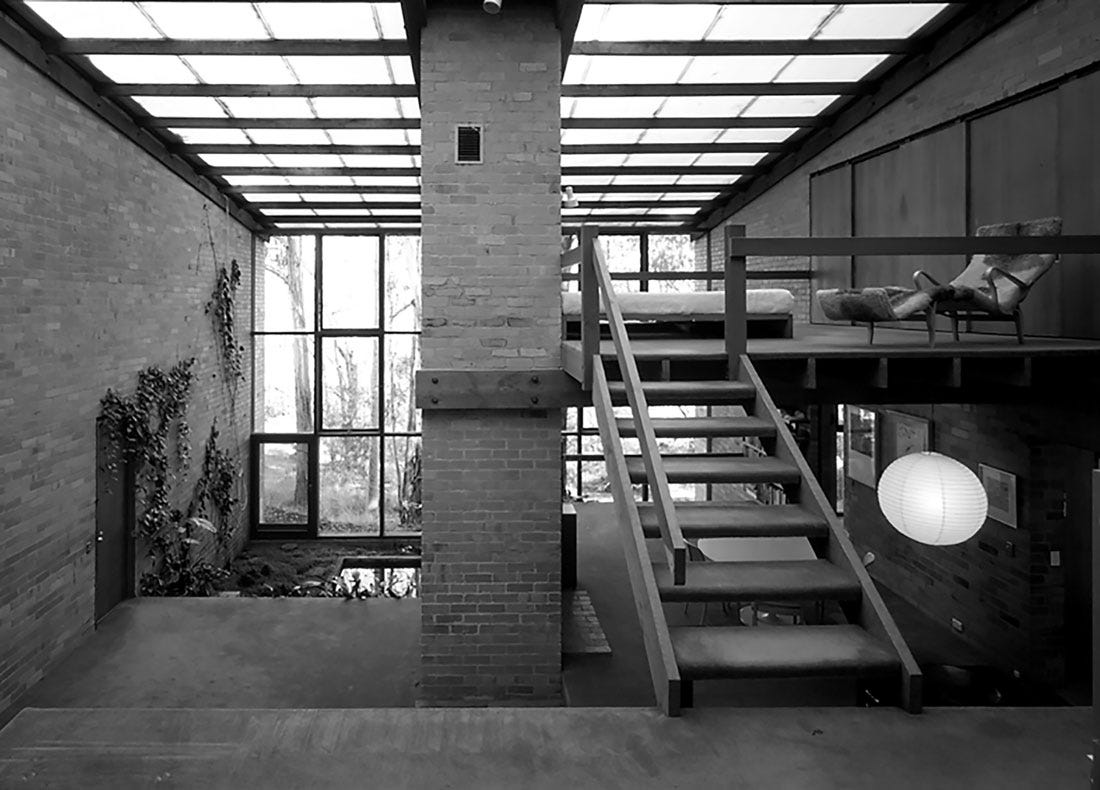
In his houses, Boyd displayed an inherent, almost prescient respect for what existed on his sites. He often let the underlying tapestry of ecology, geology and hydrology take precedence over the built form. He did this in two ways.
The first was by bringing landscape indoors and letting it exists within a building. At Featherston House, the ground – replete with dirt, water and plants – forms a living floor, while vines creep up the wall.
He also treated existing sites with great care, such as at Richardson House, where the building springs, bridge-like, over the site, leaving the ground undisturbed. He yielded to what existed or, in the words of another great Australian architect, Glenn Murcutt, he touched the earth lightly.
So when I think of these influences, and our work, I do so in a manner reminiscent to a call and response.
I see Boyd, working last century, carving a path to a new architecture, one rooted in Australia’s rituals and potentials.
Then I see our studios, making our own way, yet somehow sitting within this lineage.
So, it is inevitable that I see echoes of Boyd in the way that our work has unfolded, and in the things we remain curious about as we practice.
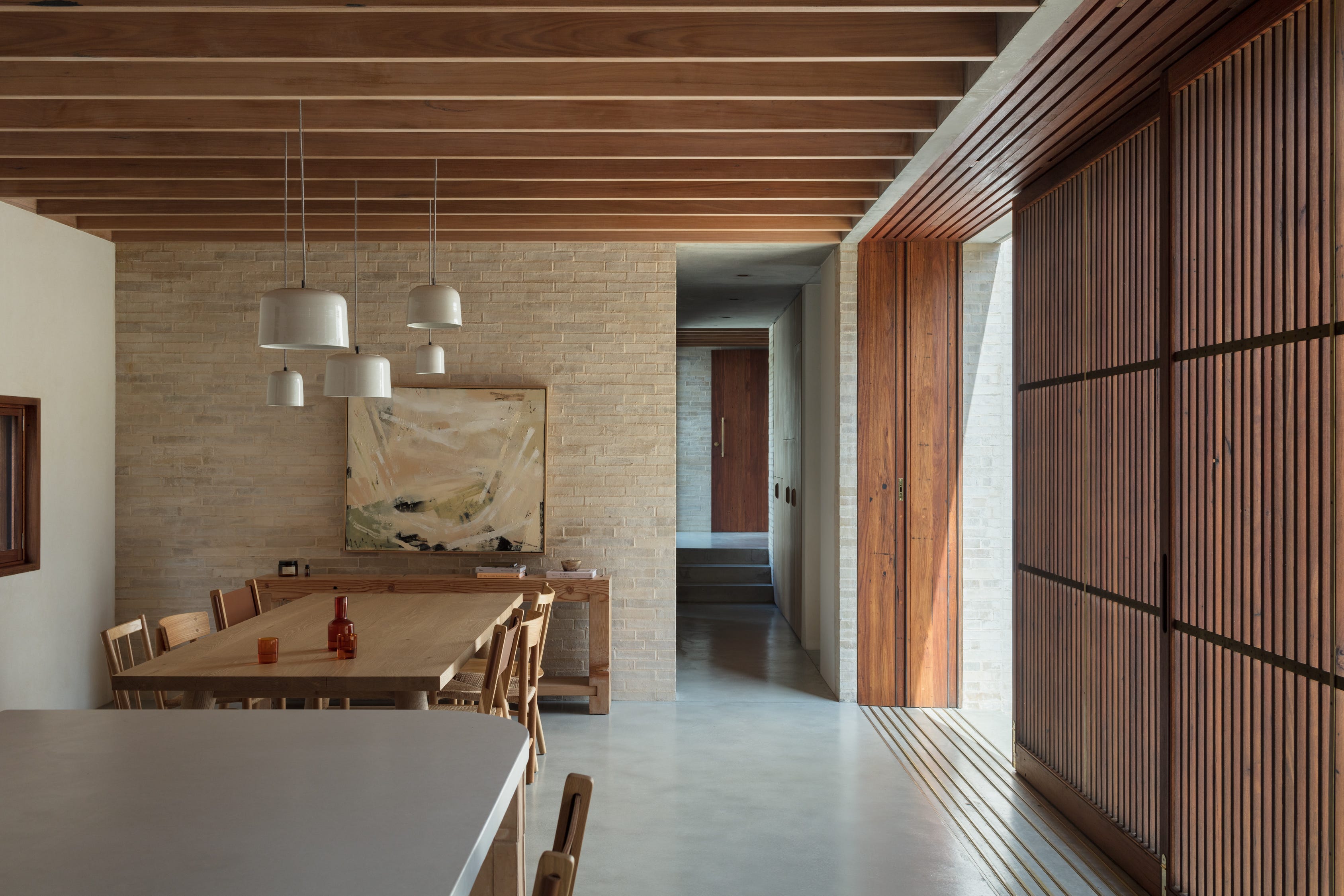
I see echoes of Boyd at Curl Curl House, where we layered the interior so our clients can live in a room bordered by flyscreens, rather the glass. In doing so, they experience some form of shifting, temporal delight: fleeting shadows, seasonal breezes, a warming and cooling floor.
I see echoes of Boyd in the section of our Three Piece House, where the ground plane morphs from building to site and back again, dissolving a traditional sense of front and back yard, courtyard and interior, house and garden.
I see echoes of Boyd in Practice Ground, and in the growing respect we have to leave our sites as untouched as possible, and to instead favour regeneration.
I see echoes of Boyd in the billowing ceiling of Draped House, which shifts from fixed plasterboard to soft shadecloth, capable of unfurling or retracting to meet the sun.
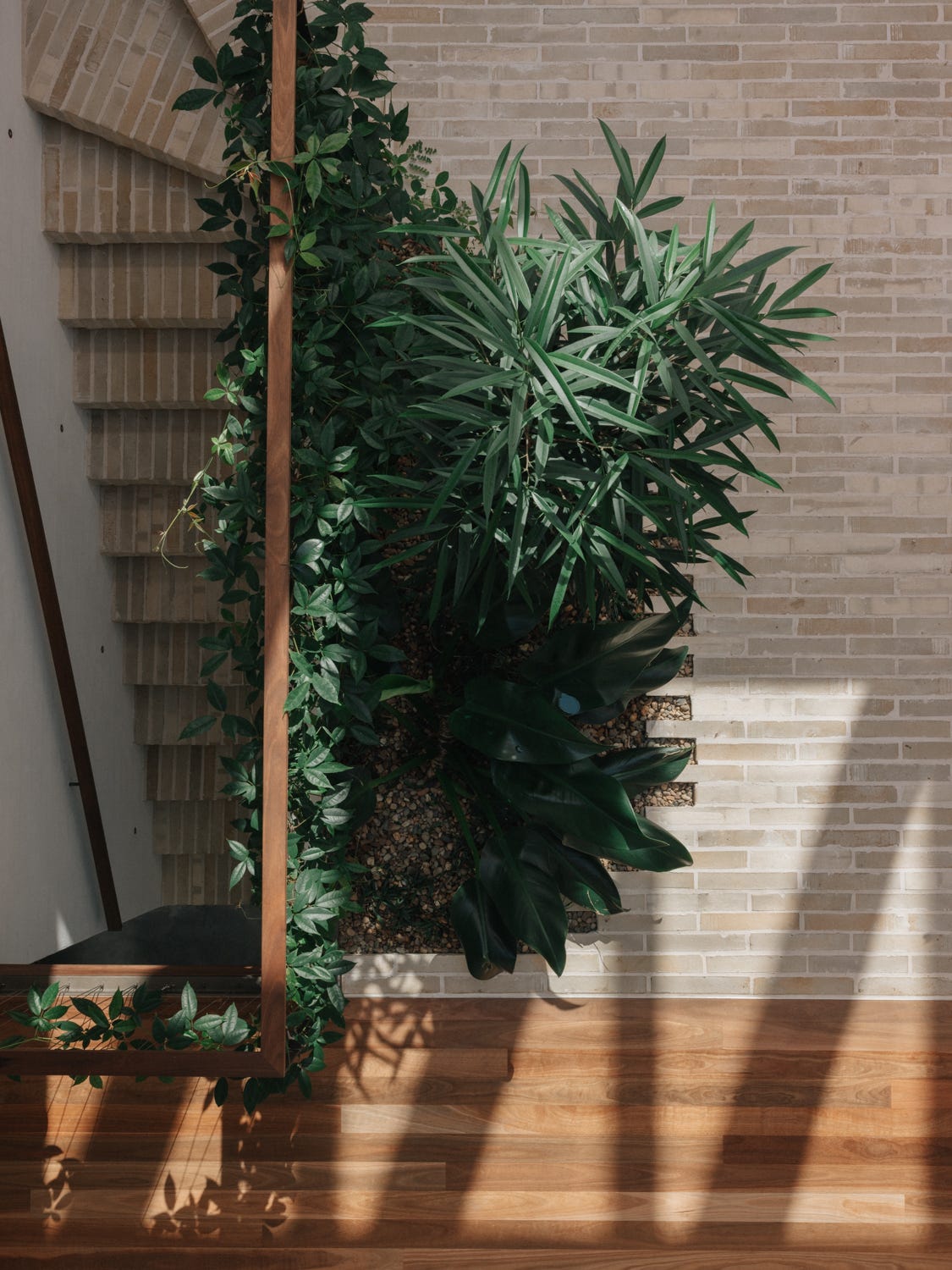
And I see countless echoes of Boyd in Cloaked House, our recent mid-century transformation, with its Sydney School roots, and its verdant atrium garden within.
Buildings aside, one of most valuable lesson I’m currently taking from Boyd is that our engagement, in this discipline – or in any discipline, really - must always remain active.
Architectural culture is not built on passive consumption, but on active discourse and exchange.
It is built by holding a mirror up to the world around us, and to ourselves, so we remain reflective: so we learn, rather than replicate; interpret, rather than imitate.
This, ultimately, is why we are here. It is why we are making time, between the bustle of practice, to read and write. As each thing cultivates the other, in its own process of call and response.
I have learnt all of this, and so much more, by looking, and looking again, at the work of Robin Boyd.
Thanks for reading.
+++
Further resources and references
Robin Boyd Redux, RMIT Design Archives Journal, Vol 9 No 2, 2019
Robin Boyd: Spatial Continuity by Mauro Baracco and Louise Wright
The Australian Ugliness by Robin Boyd
The Puzzle of Architecture by Robin Boyd
The Robin Boyd Foundation and its excellent Walsh Street Archive
I always enjoy the depth and pace of your writing Jen. Thank you.
Thank you so much Sonia - this is all pretty new for us, so we really appreciate the vote of confidence.